
How to Pair Champagne
Champagne is for so much more than celebrations! It is delicious any time of year, but the holiday season is the time to bring out the bubbly. With so many different styles of Champagne, it can go the distance with spectacular holiday food pairings.
The overall goal with any food and wine pairing is harmony. You want the food to compliment the wine, and the wine to compliment the food. Wine should match the intensity of the food so one doesn’t overwhelm the other. When food and wine are properly paired, they are both better than they would have been apart.
*Pro Tip: Champagne should be served well-chilled, at 43-50°F
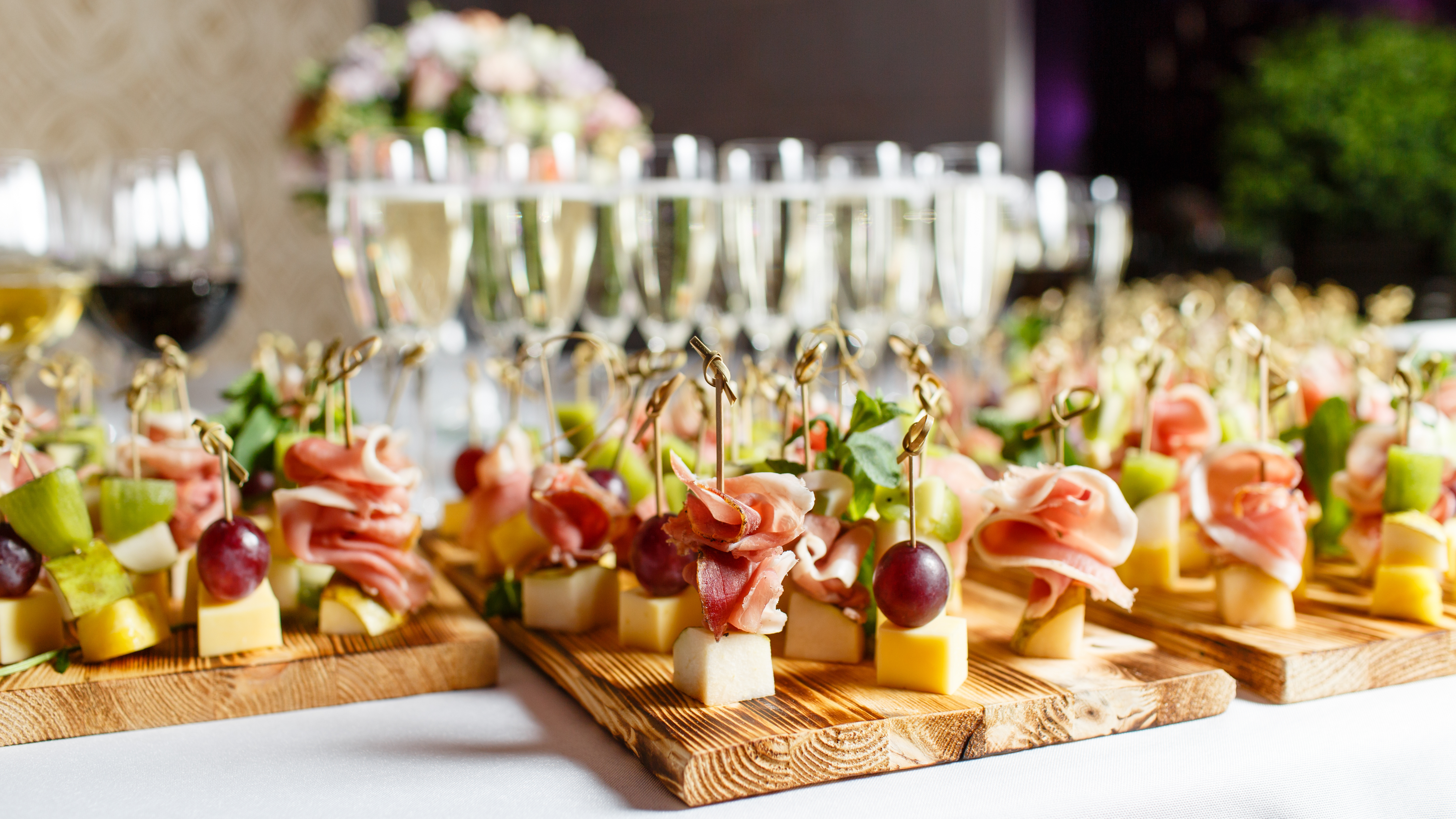 Food and Wine Pairing Basics
Food and wine interact in a way that your perception of flavors can be altered. That can occur in either a pleasant way or one that is very unpleasant. Often wine is blamed for making the food taste bad, but improperly pairing the food is a more likely culprit for an unpleasant food and wine experience.
Personal preference is also important to keep in mind. For example, everyone’s sensitivity to bitterness and spice is different, so one person’s “perfect pairing” may not seem ordinary or even off by another person. That being said, there are a few key guidelines when it comes to food and wine pairing. Keep these different wine and food characteristics in mind:
6 Food Characteristics and How They Affect Wine:
1. Salt: Increases the perception of body in wine, and decreases the perception of astringency, bitterness, and acidity in wine. Salt is a very wine-friendly characteristic of food that brings out the fruitiness in wine and softens astringency.
2. Sweetness: The presence of sweetness in food increases the perception of bitterness, astringency, acidity, and the warming effect of alcohol in the wine. It can decrease the perception of body, sweetness, and fruitiness in the wine.
It can also make a dry wine seem less fruity and unpleasantly acidic. A general rule of thumb is to choose a wine that at least matches the level of sweetness and fruitiness of the wine.
3. Acid: Acidity in food increases the perception of body, sweetness, and fruitiness in the wine. It will also decrease the perception of acidity in wine.
Acidity in food is generally a good thing for a wine pairing because it can bring a wine with very high acidity into balance and enhance its fruitiness. If the acidity in the food is far higher than the wine, the wine will seem flat and uninteresting.
4. Umami: The savory flavors of umami increase the perception of bitterness, astringency, acidity, and the warming effect of alcohol in the wine. It also decreases the perception of body, sweetness, and fruitiness in the wine.
Foods with high levels of umami can be difficult to pair with wine. The addition of salt softens the hard characteristics of very savory foods. For example, grilled meats, mushrooms, and asparagus are all high in umami, but with the appropriate addition of salt (often from a sauce or seasoning in preparation) bring the dish into balance, and then does not have an adverse effect on the wine.
5. Bitterness: Bitterness in food increases the perception of bitterness in the wine. A very tannic wine paired with a dish that has a high level of bitterness would exponentially increase the overall perception of bitterness.
6. Spice: Spicy foods increase the perception of bitterness, astringency, acidity, and the burning effect of alcohol in the wine. It decreases the perception of body, richness, sweetness, and fruitiness in the wine. When a spicy dish is paired with a very tannic wine, it will generally create a very unpleasant experience. Spicy foods can be tricky dishes for pairing, but as a rule of thumb, white wine with a hint of sweetness pairs very well with these foods.
“I only drink champagne when I’m happy, and when I’m sad. Sometimes I drink it when I’m alone. When I have company, I consider it obligatory. I trifle with it if I am not hungry and drink it when I am. Otherwise I never touch it—unless I’m thirsty.” —Lily Bollinger
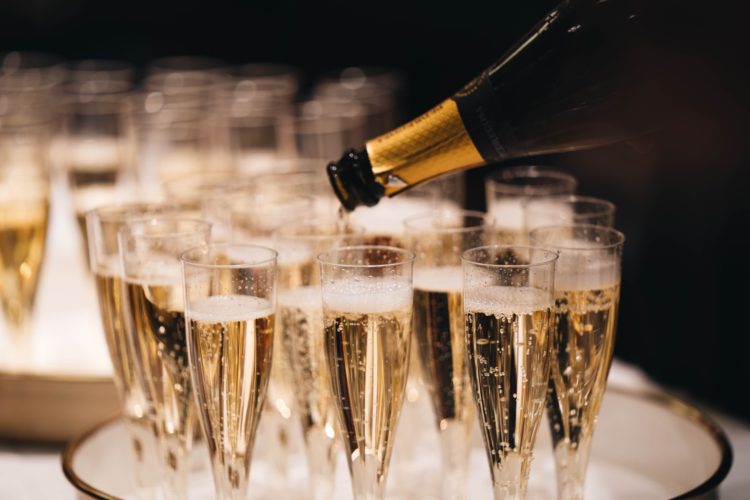 Champagne: The Region & The Iconic Sparkling Wine
There is no denying that Champagne has set the standard for sparkling wine around the world. Its method is used and referenced as metodo classico, method champenoise, or the traditional method. It refers to the method of production with a secondary fermentation in-bottle, time spent on its lees (where Champagne acquires its rich texture and autolytic characteristics of buttery brioche, creamy cheese, and biscuit), disgorgement, and the final step of dosage (additional wine and sugar to bring the wine into final balance after disgorgement and to adjust the level of sweetness. Brut Nature and Extra Brut Champagnes typically receive zero dosage) and final bottle aging before release.
Climate: The climate in Champagne has much to do with the flavor profile of the final wine. Champagne is located at the 49th parallel—at the edge of possibilities for viticulture. The climate is cool continental, and vineyards are often threatened by spring frosts, and rainy, cloudy weather. Champagne’s climate yields grapes that are very high in acid with underripe, green fruit characteristics. Even in the warmest of years, grapes still have low sugar levels and very high levels of acidity.
 Grape Varieties, Vinification, & Aging
Grapes Used in Champagne: Chardonnay, Pinot Noir, and Munier
Styles of Champagne: Champagne can be made with any combination of these three grapes or just one on its own. If the wine is made only of Chardonnay it is referred to as Blanc de Blancs. A bottle of bubbles made with Munier and/or Pinot Noir is referred to as Blanc de Noirs. Champagne vinified with the saignée method will produce a rosé champagne that has some red fruit characteristics and structure from a hint of tannin.
These wines can be made in vintage styles (made only in the best years and must be aged for a minimum of 36 months), or in a non-vintage bottling (often made from a blend of reserve wines from several different vintages, and must be aged for a minimum of 15 months, with at least 12 of those months on its lees). Vintage Champagne is the most exclusive and prestigious with only 5% of grapes harvested each year being made in this style.
“Champagne can only be made in Champagne. Why? First, we have very bad weather. Second, we have our three grape varieties and chalky soil and all that. Third, we have 330 pages of regulations.” —Pascal Leclerc-Briant
Bubbles: The Great Pairing Equalizer
 Champagne introduces another sensation to include in the mix of sweetness, acidity, body, and flavor that affects interactions with food—effervescence. Bubbles create a kinetic and lively textural sensation on the tongue. It has a cleansing and refreshing effect on fat, salt, and bitterness, preparing the palate for the next bite. Highly salted foods work better with wines that have high effervescence, and the unpleasant impact of bitterness in food is decreased when paired with effervescent wines.
The presence of tiny active bubbles in Champagne works as a bit of a distraction that masks unpleasant bitter or too salty flavors in food to equalize the overall flavor experience. The next time you need to pair a wine with radicchio or endive reach for Champagne!
Aroma & Flavor Characteristics of Champagne
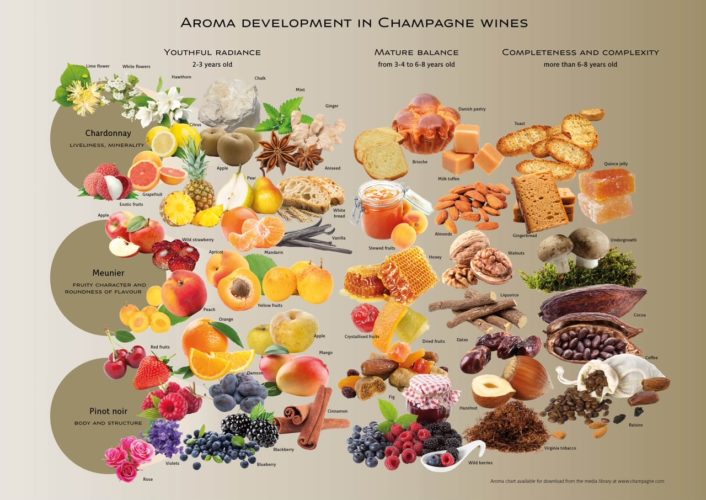
Aroma and flavor characteristics in Champagne evolve as the wine matures in the bottle. This graphic from Comité Champagne is a beautiful depiction of this evolution:
Tasting Notes and Pairings
While each bottle of Champagne will taste different based on its cépage (the percentage of each grape variety used in a blended wine), region, dosage, and aging, there are a couple of flavor and texture characteristics that remain the same: high acidity, high minerality, and full-bodied mousse from the tiny bubbles. More detailed descriptions are as follows:
Non-Vintage Champagne
Tasting Notes: Toasty aromas with citrus, green pear, green apple, and sometimes a hint of white flowers. A bit of toasted brioche is balanced with bright acidity and chalky minerality on the finish. Non-vintage Champagne is generally known for its bright, crisp characteristics balanced with yeasty, brioche flavors. This style of Champagne is quite versatile when it comes to pairing potential.
Pairings: Warm brie en croute, oysters Rockafellar, mussels, fried fish, salty french fries, popcorn, potato chips, fried calamari, white pizza, and fried chicken.
Vintage Champagne
Tasting Notes: Vintage Champagne has similar characteristics as Non-Vintage, but is also richer and more full-bodied, and bodacious. Aged Champagne displays delicious flavors of toasted nuts, baked apples, vanilla, and caramel. Vintage Champagne is often described as lush, rich, and creamy. This opulent wine deserves to be served with equally rich foods.
Pairings: Caviar served with all the trimmings, smoked salmon on bagels with cream cheese, filet mignon, foie gras, lobster and crab served with drawn butter, Croque madame, and Swedish meatballs.
Blanc de Blancs
Tasting Notes: This style of Champagne is lighter than other blends. It is linear with very high, racy acidity, high minerality, and predominant citrusy notes of lime and lemon peel. This zippy bubbly has a lively electric quality to it that not only stands up to similarly acidity dishes but cuts through very rich, fatty foods too. Blanc de Blancs is often served as an aperitif on its own but also pairs beautifully with foods.
Pairings: Raw oysters, scallops, potato chips, light canapes, goat cheese, frittata, crudites, and spinach artichoke dip.
Blanc de Noir
Tasting Notes: Produced only with black grapes, it has a slightly richer character than non-vintage or Blanc de Blancs Champagnes. It has characteristic red berry flavors, as well as aromas of citrus, stone fruit, and a refreshing minerality.
Pairings: Grilled halibut, cured meats, olives, spring rolls, crab cakes, semi-soft cheeses like gruyère, and comté, duck, and vegetable tempura.
Rosé Champagne
Tasting Notes: Typical flavors of Champagne with the addition of red berries and a bit of tannic structure. Rosé champagne also displays characteristics of citrus and earthy aromas.
Pairings: Grilled ribeye steak, duck, cured meats, strawberries, raspberries, stone fruits, stuffed mushroom caps, and prosciutto fig bruschetta.
Champagne with a hint of sweetness
The high levels of acid in Champagne can be a bit sour, and a hint of sweetness can round out the flavor. Sweetness in wine also lends itself easily to a wide variety of food pairings that may have been difficult without the bit of sugar. Any of the above styles of Champagne can be produced with a bit of residual sugar.
Sweetness Designations of Champagne
Brut Nature | Extra Brut | Brut | Extra Dry | Dry | Demi-Sec | Doux
Pairings: Profiteroles, macarons, creme brulee, chicken wings, sushi, pepperoni pizza, spicy charcuterie, jalapeño poppers, spicy Thai and Mexican food, ice cream, lemon desserts, tiramisu, chocolate bonbons, and frangipane tarts.
*Pro Tip: Always choose a wine that is at least as sweet as the food it is being paired with.

Drink What You Like
More than anything, personal preference is key when it comes to what to drink with your food. Pop some bottles of beautiful bubbly and keep your holiday season merry and bright!