
If you’re embracing a healthier lifestyle in the spirit of new beginnings in the new year, your choice of what to drink falls into the mix of dietary choices. Nutrition facts are not required for wine labeling, so how can you know how many calories are in your glass? Knowing the calorie content of wine and where those calories come from will help you to make well-informed choices with your favorite wines. Keep reading to explore the calorie content of different types of wine, where those calories come from, and the potential health benefits of moderate, mindful wine consumption.
Calories in Wine: The Basics
The calorie content of wine can vary depending on the type and serving size. On average, a 5-ounce (148 ml) glass of dry wine contains about 120-130 calories. However, it’s important to note that this is just an approximation, and the actual calorie count may differ slightly depending on the factors of alcohol content and sweetness.
Where Do the Calories in Wine Come From?
- Alcohol: The majority of the calories in wine come from alcohol. One gram of alcohol contains approximately 7 calories. Alcohol accounts for the lion’s share of the calorie content in most wines. Dry wines, such as Cabernet Sauvignon or Pinot Noir, have very low residual sugar content, so most of their calories come from alcohol.
- Residual Sugar: Some wines contain a more significant amount of residual sugar such as Moscato d’Asti, some Rieslings, and dessert wines such as Sauternes. On average, one gram of sugar contains about 4 calories. While sweet wines have more sugar than dry wines, it’s still a minor contributor to the overall calorie count when compared to alcohol.
- Other Contents: Wine is composed of more than just alcohol and sugar. It also contains water, tannins, acids, and various aroma compounds. However, these components’ caloric contribution is negligible and is not significant in the overall calorie calculation.
 Wine Calorie Guide
Here’s a rough breakdown of the calorie content in a 5-ounce glass of some common wine types:
- Dry Red Wine (e.g., Cabernet Sauvignon, Pinot Noir): Approximately 120-130 calories per glass.
- Dry White Wine (e.g., Chardonnay, Sauvignon Blanc): Similar to dry red wines, around 120-130 calories per glass.
- Sweet Wine (e.g., Riesling, Port): Sweeter wines can have significantly more calories, ranging from 160-220 calories per glass or more.
Here is a more detailed breakdown of wine’s calorie content:
-
-
-
- Sweet white wine (6-10% ABV): Approximately 90-125 calories
- Some Vouvray, Spätlese Riesling
- Sweet white wine (9-12% ABV): Roughly 150-180 calories
- Moscato, Auslese Riesling, some Gewürztraminer
- Dry white wine (9-13% ABV): About 100-120 calories
- Pinot Grigio, Pinot Blanc, Albariño
- Dry white wine (12-14% ABV): Nearly 130-145 calories
- Chardonnay, Sauvignon Blanc
- Red wine (11-13.5% ABV): Around 115-140 calories
- Cabernet Sauvignon, Syrah, Pinot Noir
- Red wine (13.5-16% ABV): Approximately 140-165 calories
- Cabernet Sauvignon, Syrah, Pinot Noir
- Sparkling wine (12.5% ABV): Close to 130 calories
- Champagne, Cava, Prosecco
- Dessert and fortified wine (14-21% ABV): Roughly 160-230 calories
- Tokaj Aszu, Vin Santo, Sauternes, and port
- Sweet white wine (6-10% ABV): Approximately 90-125 calories
-
-
💡Pro Tip: Many dry wines are perceived as being sweet because of their preponderance of aromatic, ripe characteristics. For example, some Rieslings and Sauvignon Blanc wines are perceived to be off-dry when they are not because of their fruity, full, ripe, and complex aroma and flavor characteristics.
 Vineyard Growing Environment & Calorie Content
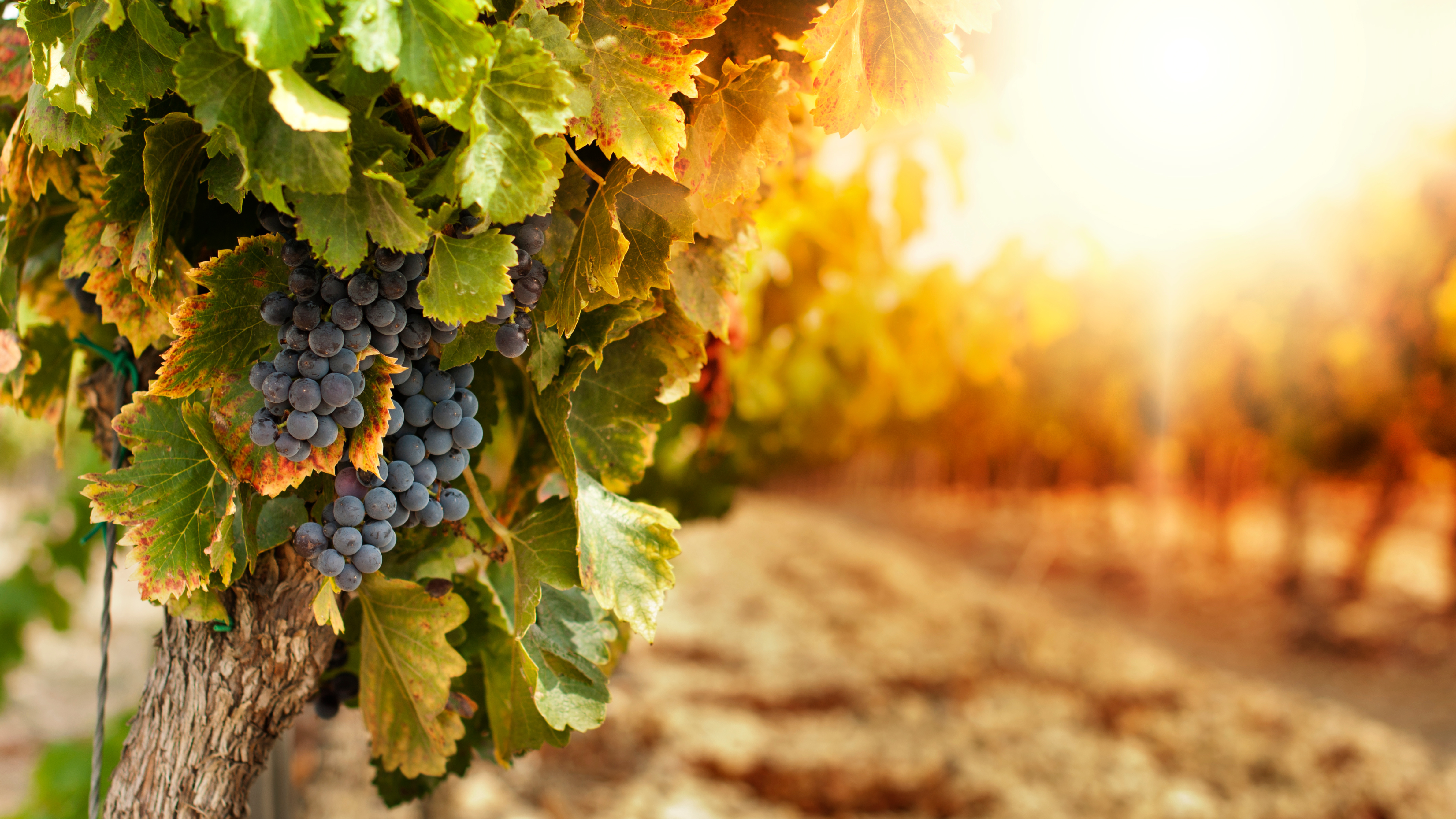
The growing environment the grapes are harvested from also makes a difference. Warmer climates typically yield grapes with higher sugar content than those that are cool. The sugar content in the harvested grapes determines the final ABV and/or residual sugar content. If grapes with high sugar content are fermented to dryness, the final wine will be high in alcohol. Example: McLaren Vale Shiraz vs. Chablis. McLaren Vale Shiraz can sometimes exceed 16% ABV, while Chardonnay from the cool continental environment of Chablis is typically more moderate, 11-12.5% ABV.
The winemaker could also choose to stop the fermentation for a more moderate alcohol content and leave a level of residual sugar depending on the style of wine desired. An example of this would be an off-dry Chenin Blanc from Vouvray in the Loire Valley. The alcohol content is moderate with a bit of sweetness to balance the grape variety’s naturally high acidity.
Health Benefits of Moderate Wine Consumption
Moderate wine consumption, particularly red wine, has been associated with certain health benefits, largely attributed to its phenolic compounds (strong emphasis on moderate consumption).
Here are some potential advantages:
-
- Antioxidants: Red wine is rich in antioxidants, like resveratrol and flavonoids, which may help protect cells from damage caused by free radicals.
- Heart Health: Moderate consumption of red wine has been linked to a reduced risk of heart disease due to its potential to improve cholesterol levels and lower blood pressure.
- Longevity: Some studies suggest that moderate wine consumption may contribute to increased longevity and a lower risk of chronic diseases. Many ‘Blue Zone’ communities drink red wine moderately during meals with friends and family as a means of maintaining social connections.
- Neurological Health: Resveratrol in red wine may have neuroprotective properties, potentially helping reduce the risk of neurodegenerative diseases like Alzheimer’s.
 Sipping Smart
The calorie content of wine primarily comes from alcohol, with minimal contributions from residual sugar and other components. Dry wines usually have fewer calories than sweet wines due to their lower sugar content, and the wine’s origin makes a difference in the sugar content. If you’re watching your calories but still want to indulge in a glass of wine, seek out dry wines with lower alcohol content. Cheers to sipping smart!
*This content is not meant to be official medical or nutritional advice, simply informational and entertaining.