
Our Wine Director, Shelly, was one of only sixteen wine professionals selected worldwide to attend this prestigious masterclass that was held in Spain the first week of February 2026. We’re proud to support Shelly as a global ambassador for this historic sparkling wine region and look forward to opportunities where she can share her insights.
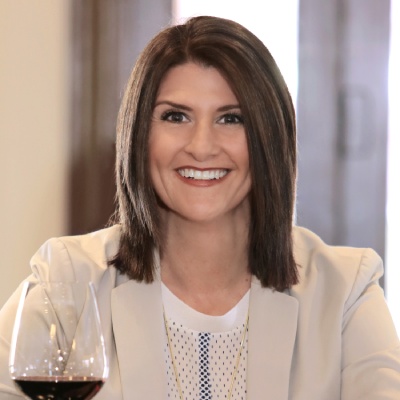
How Shelly Got the Invitation
Shelly’s path to the advanced program began years earlier. In 2020, Cava DO launched a major global push to raise awareness and credibility for Cava—particularly beyond the mass-market perception many consumers still hold.
Shelly saw the first Cava educator series online and enrolled. It was designed to build a foundation, with the possibility of in-person opportunities later (timing that, like many things, was disrupted by the pandemic). But as Cava gained traction and expanded its international outreach, the advanced experience surfaced—and Shelly applied.
“It kind of just popped up: ‘Would you consider taking this advanced educator series?’” she said. “It was vague, but I applied… and got accepted.”
For Cava DO, that’s the point: identify wine professionals who are already invested, already teaching or shaping buying decisions, and equip them to become true ambassadors—people who can go home and elevate what Cava means in their market.
A Course That Starts at the Source: The Regulatory Council
The experience began with a pickup in Barcelona, then a direct transfer into Cava country—starting at the Cava DO Regulatory Board itself.
There, Shelly and the group received a full orientation and a masterclass focused on what the region calls its “new era of excellence”—a quality-forward effort that includes clearer labeling and stricter standards designed to guide consumers toward higher-tier Cavas.
Then came one of the most energizing parts of the course: a blind tasting led by a Master of Wine, structured as a team challenge.
“We got in groups,” Shelly said, “trying to figure out which were the oldest ones, which one had a different grape… one was Chardonnay-heavy. It was so fun.”
For Shelly, it was also a preview of what the course would do best: connect theory to real sensory markers—then translate that directly into how we communicate quality to clients.
The Vineyards: Sustainability as a Culture, Not a Buzzword
If there was one theme that impressed Shelly most—beyond sheer quality for price—it was how deeply organics and sustainability are embedded into the higher tiers of Cava.
“I don’t think I realized how big the organic scene is there and how seriously they take it,” she said.
The course spent meaningful time in the vineyards discussing pruning, cover crops, composting, organic and biodynamic practices, and the practical realities of farming in a region that contends with drought pressure.
One detail that stood out: vineyard material from pruning was often left in place to break down naturally—part of a broader mindset of returning everything possible back into the system.
For several attendees, it was their first time experiencing vineyards in-person, which made the hands-on segments especially valuable. As Shelly noted, there’s an important difference between knowing viticulture and seeing it—walking rows, talking through canopy decisions, and understanding how those choices show up in the glass.

Understanding the Top Tier: Paraje Calificado
A major focus of the program was Cava’s highest echelon, where prestige is earned through strict requirements and traceability.
Shelly described a visit that included hiking through woods that suddenly opened into a dramatic vineyard landscape—an unforgettable way to teach a simple point: not every site qualifies.
For the top level, vineyards must meet elevated requirements such as:
- A contained, qualifying site
- Vines at least 10 years old
- Organic farming
- Estate control from grape to glass
- And, at the very top tier, hand-harvesting
In Shelly’s words, it’s a system that tries to protect authenticity and signal seriousness—especially in a market where many consumers only encounter entry-level Cava.
The Producer Visits: Where the “Why” Lives
The course included multiple winery visits—each designed to show a different face of Cava: culture, history, architecture, farming philosophy, and production technique.
Shelly was especially struck by how many of the winemakers were women.
“There are so many female winemakers,” she said. “It was so cool to see.”
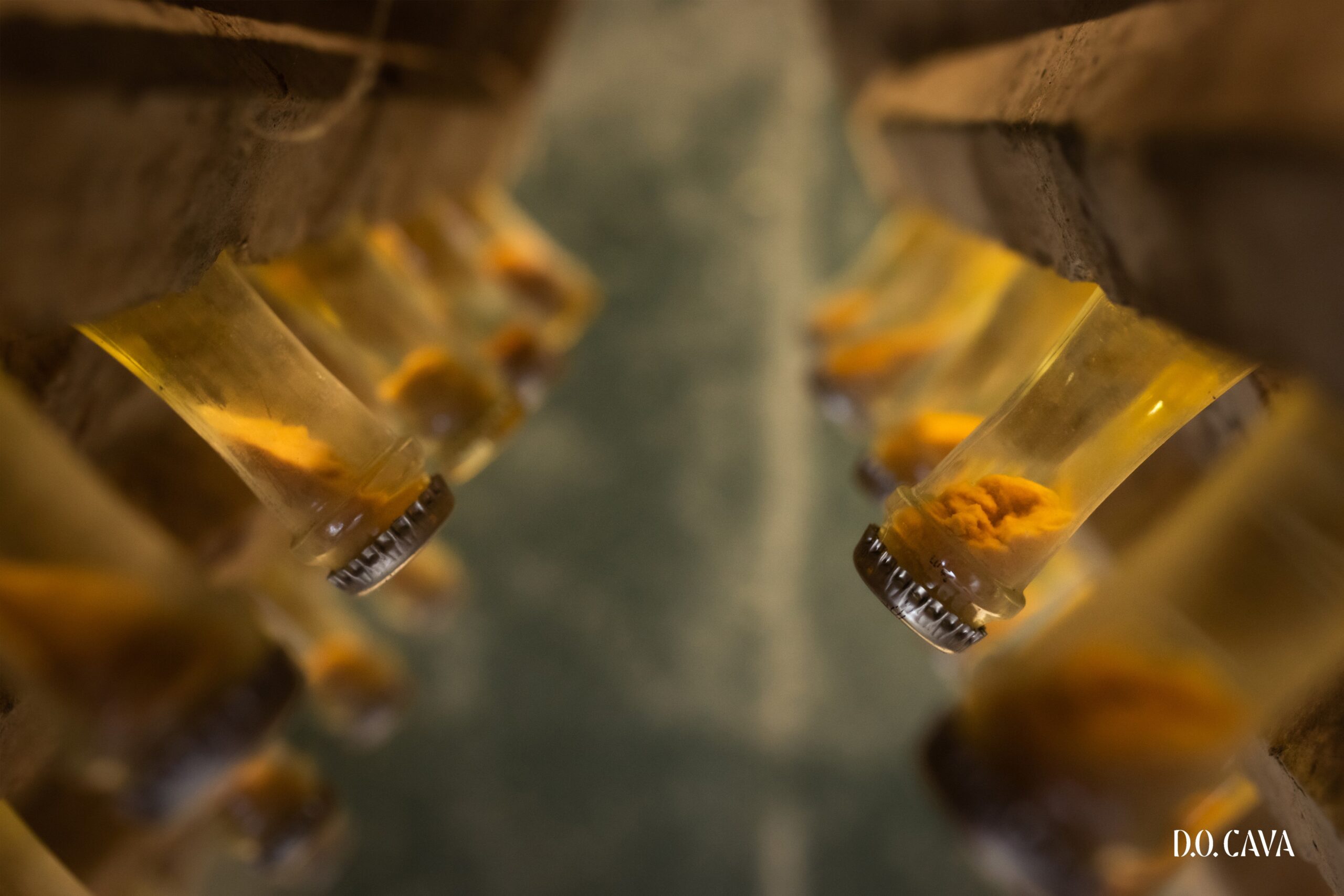
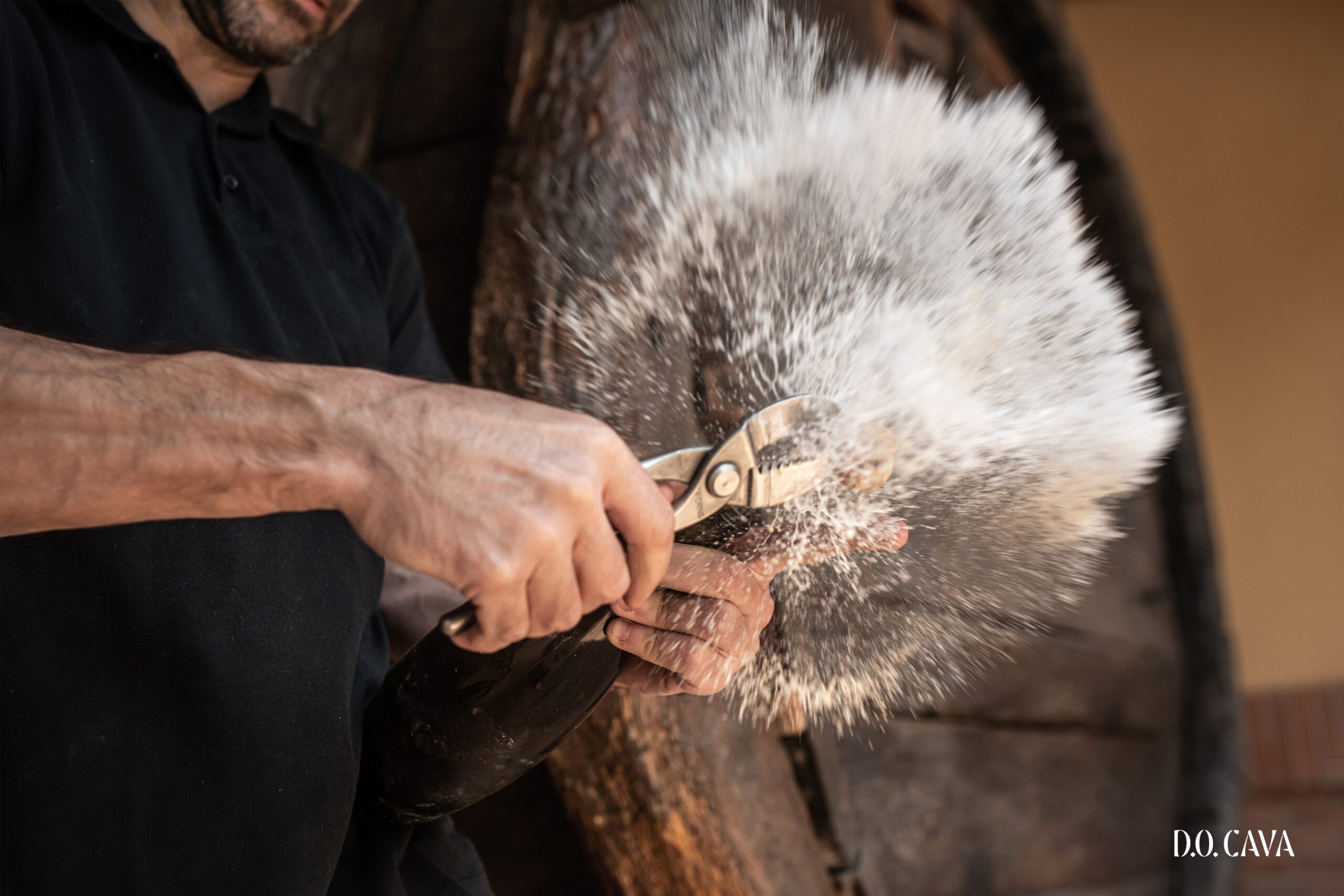
At Parés Baltà, a female winemaker walked the group through traditional method production from start to finish. Seeing riddling, lees aging choices, bottle handling, and cellar logistics in real time turned abstract concepts into lived reality—especially for those who teach wine professionally.
And at Codorníu, the experience shifted from intimate to monumental.
“It was so impressive,” Shelly said. “We went in the tunnels… dark and moldy… webs everywhere. We took a tram to tour the caves because it’s so large.”
This wasn’t just a tour—it was a reminder that Cava has deep roots, historic scale, and technical mastery that often goes underappreciated outside Spain.
The Blending Workshop: Craft, Math, and a Rosé Named “Colorado”
If the vineyard work provided context, the blending session delivered empathy.
At Vilarnau, Shelly’s group was tasked with building a blend—working within real base-wine constraints (including alcohol targets), calculating how the second fermentation affects finished alcohol, blending for flavor and aging potential, and then naming the final wine.
“It was unbelievable,” Shelly laughed. “We were doing so much math and calculations and blending for flavor… and then we had to name our blend.”
Their entry—cheekily named “Colorado”—leaned rosé. It didn’t win the prize, but it nailed the point: blending isn’t just artistry. It’s also structure, chemistry, rules, and long-term intention.
“You realize how difficult it is to blend,” Shelly said. “You have to really be a craftsman.”
The Exam: Downplayed… Until It Wasn’t
The group was repeatedly told not to worry.
“They kept downplaying it,” Shelly said. “‘Oh, you guys are fine.’”
Then the exam hit—deep, specific, and absolutely dependent on preparation. Shelly credits the pre-course education module (unlocked after acceptance) for making success possible at all.
“If I didn’t do all of the prep work, there’s no way I would have passed that exam.”
The result? Shelly earned the second-highest score, and the program recognized her performance with a special bottle of 2017 Cava—a small but meaningful symbol of what this credential represents: demonstrated mastery.
What People Get Wrong About Cava
Shelly’s biggest misconception-buster is simple: most Americans haven’t tasted the Cava that defines the category at its best.
“What we get exposed to are the $10 Cavas,” she said. “We’re not touching their higher tiers… and people don’t realize how strict the regulations are.”
A few of her key takeaways:
- Traditional method is non-negotiable—and time on lees matters.
- Higher tiers increasingly emphasize organic viticulture and serious sustainability commitments.
- Quality-to-price is wildly compelling—including aged, vintage Cavas that can deliver at a fraction of comparable Champagne pricing.
- Cava is complex not only because of production, but because it spans multiple regions, which can confuse consumers accustomed to place-based names like Champagne.
And if a member says, “I don’t like Cava”?
Shelly’s response is honest—and inviting:
“I understand, because the Cava you’ve been exposed to is probably in a mimosa… But not once did I come across that flavor profile [people complain about]. These showed more stone fruit, citrus… high acid, super fresh.”
A Rosé Rule Worth Knowing
One of Shelly’s favorite “teach it immediately” details: Cava Rosé cannot be made the way Champagne Rosé often is.
In Cava, it must be intentionally made as rosé from the beginning, and it must include a minimum percentage of red grapes. You can’t simply blend red and white at the end.
“That’s like a law,” she said. “It’s not allowed.”
It’s a perfect example of why this credential matters: it gives Shelly the kind of precise, fascinating detail that turns a tasting into a story—and makes members feel like they’re learning something real.
The Soul of Cava: Place, Mountains, and Freshness
For Shelly, the “sense of place” is anchored in where most Cava truly comes from: Penedès, shaped by Mediterranean influence and protected by surrounding mountain ranges—especially the dramatic presence of Montserrat.
Those geographic features help create a diurnal shift that supports what sparkling wine needs most: acid retention.
“They’re Mediterranean,” Shelly explained, “but they have that diurnal temperature shift… so at night it cools down enough to retain that acidity… the backbone, the spine.”
It’s the kind of terroir explanation that makes Cava feel less like a category and more like a place you can picture—and taste.
Why This Matters for Vinum 55
Shelly’s closing reflection wasn’t about personal accomplishment—it was about culture.
“I was grateful that Vinum values that we want to keep learning,” she said. “Not every place values that.”
That’s the real win: when a company supports continued education, it doesn’t just build credentials. It builds energy, curiosity, and momentum—the things that translate into better selections, better events, better service, and a more inspired wine community.
Shelly is already exploring how to bring more of these higher-tier Cavas to our market, and she’s eager to turn the experience into something members can taste and learn from while it’s still fresh.
And based on the way she talks about it? This won’t be a one-off. It’s the beginning of a deeper Cava story at Vinum 55—one we can’t wait to share at the table.