
You’ve Heard of Spurrier. But Do You Know Whose Idea It Actually Was?
In celebration of the 50th Anniversary of the Judgment of Paris, May 24, 1976
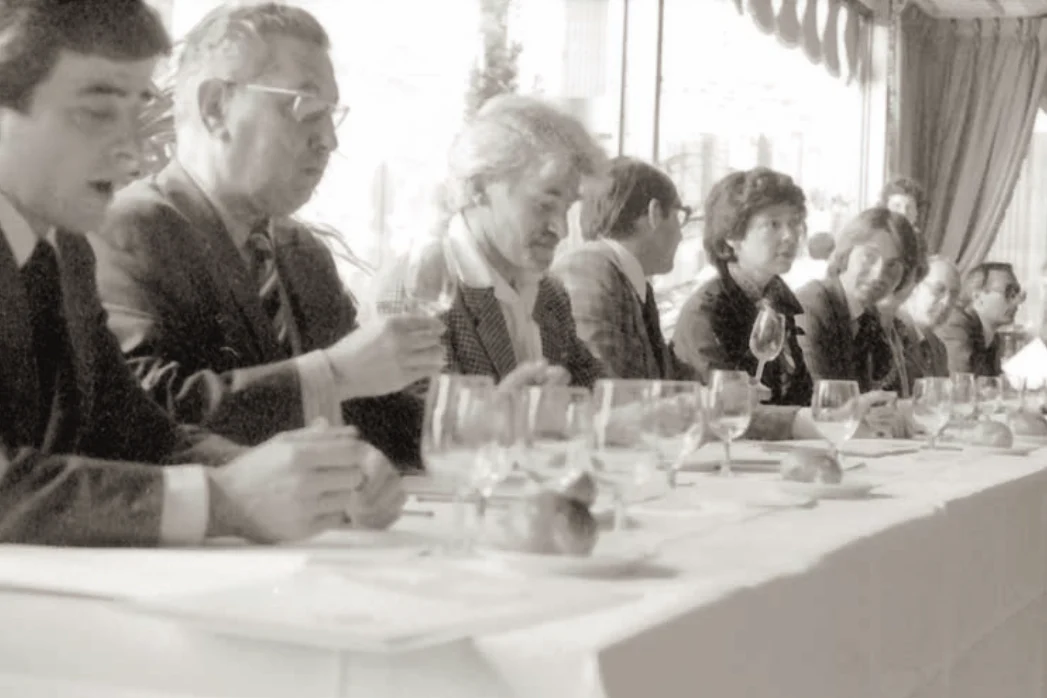
Every great wine story has a hero. In the mythology of the Judgment of Paris (the blind tasting that shook the wine world on May 24, 1976), that hero is almost always the same man: Steven Spurrier, the impeccably dressed British wine merchant who organized a rainy-afternoon tasting at the InterContinental Hotel in Paris, watched California beat France at its own game, and changed wine history forever.
But there’s a name that gets far less credit. A woman who visited Napa Valley on her summer vacation, who wrote the wine columns and ran the school. Who said, in so many words, these wines deserve to be seen.
Her name is Patricia Gastaud-Gallagher. And the Judgment of Paris was her idea.
An American (with a very good palate) in Paris
To understand how Patricia Gallagher came to change the wine world, you have to picture Paris in the early 1970s. Specifically, a small wine shop and school tucked into the Right Bank called Cave de la Madeleine and L’Académie du Vin. The shop was owned by Steven Spurrier, who had the rather audacious idea of showcasing wines from outside France in the heart of Paris. This was a genuine act of rebellion in a city where French wine was treated as an article of faith.
Gallagher, a Delaware-born graduate of Connecticut College for Women with a degree in government, had arrived in Paris in the late 1960s as a freelance journalist and editor for the International Herald Tribune. Her passion for wine led her to Spurrier’s school, and in 1973 she became the first director of L’Académie du Vin—the first private wine school in all of France.
The two made a complementary pair. Spurrier was consumed with the wine shop. Gallagher ran the school. And it was the school, with its English-speaking expat clientele, that made their corner of Paris a magnet for American wine enthusiasts and visiting California vintners (people who would arrive with bottles tucked under their arms and stories from Napa Valley on their controversial lips).
The Summer That Changed Everything
By the mid-1970s, California wines had started appearing on Gallagher’s radar with increasing frequency. American winemakers were passing through Paris. Wine writers were bringing bottles. The quality, she noticed, was improving dramatically.
In the summer of 1975, Gallagher took matters into her own hands. On her personal vacation, she traveled to Napa Valley and Santa Cruz to taste for herself. She visited emerging wineries, walked vineyards, and sat across from winemakers who were doing something genuinely new with Chardonnay and Cabernet Sauvignon—coaxing from California soil a richness and structure that the wine establishment hadn’t yet acknowledged.
She came back to Paris more than impressed.
As Spurrier himself later wrote in the Académie du Vin Library:
“American-born Patricia Gallagher—who was running the school at the time, as I was heavily involved in the busy wine shop—suggested we give a tasting to draw attention to the high-quality wines California had to offer. She had spent time in Napa in September 1975, returning even more impressed with the Chardonnays and Cabernet Sauvignons.”
That suggestion, casual, collegial, born from genuine enthusiasm, became the Judgment of Paris.
From Suggestion to History: How It Actually Came Together
Gallagher proposed the tasting as a tribute to the United States Bicentennial. 1976 marked 200 years of American independence, and what better way to honor it than to put California wines in front of the most respected palates in France? Importantly, she never originally envisioned a blind tasting or a competition. That was Spurrier’s twist. He reasoned that if the wines were tasted without labels, the results (surely a French victory) would carry more weight. The blind format was the most honest way to let the wines speak. He never imagined they would speak quite so loudly in California’s favor.
With the concept settled, the logistics began. Spurrier traveled to California over Easter 1976 to make a final selection of six Chardonnays and six Cabernet Sauvignons, deliberately choosing lesser-known producers rather than already-famous names like Robert Mondavi or Beaulieu Vineyard. He wanted to prove the quality was widespread, not a fluke from one well-funded winery.
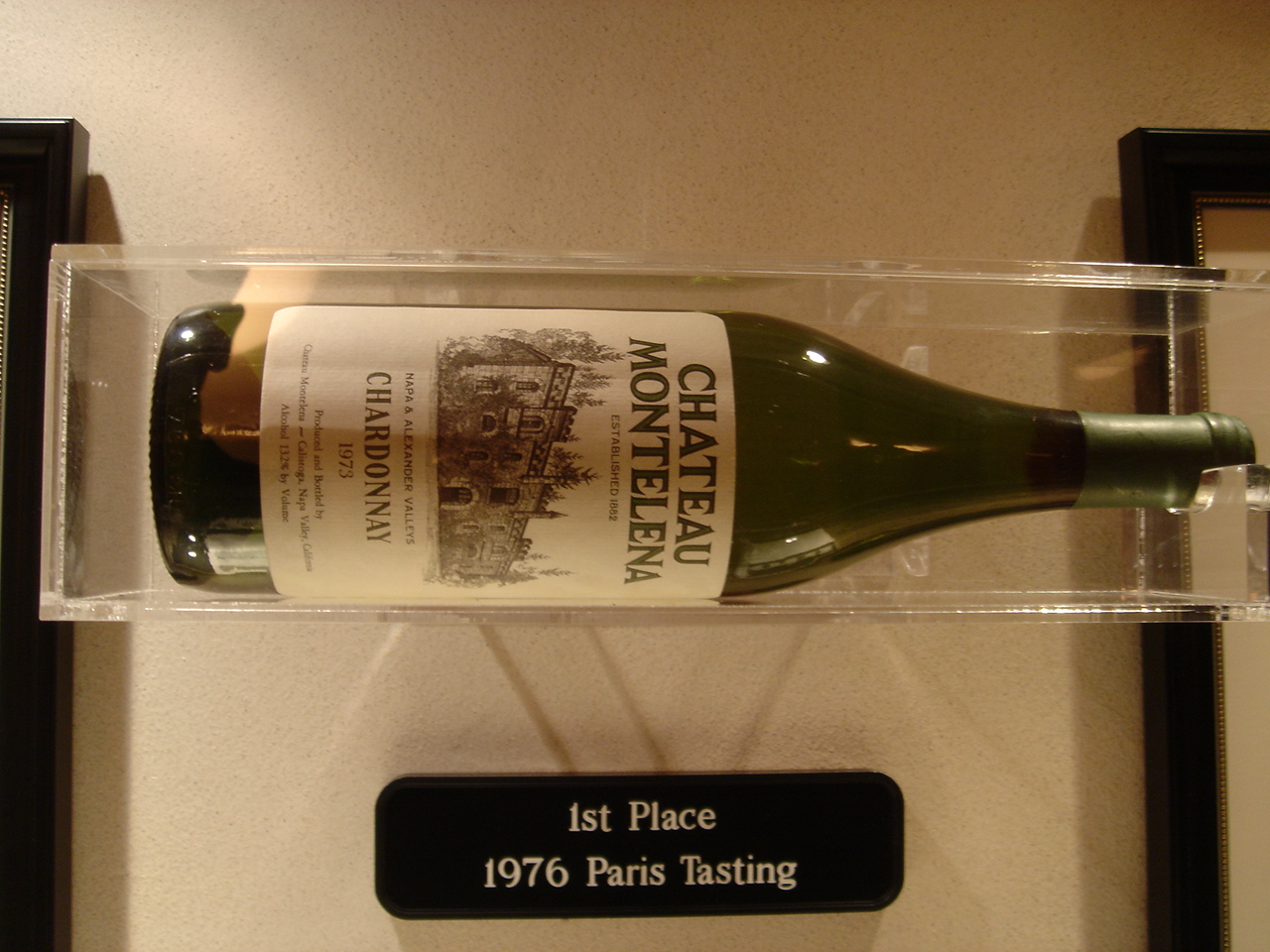
Getting the wines to Paris was its own adventure, one that required yet another woman’s ingenuity. Joanne Dickenson DePuy, a friend of Gallagher’s and an American wine tour organizer, had arranged for the bottles to be transported to Paris with a tour group she was leading. When customs threatened to derail the plan, she personally negotiated with TWA officials to carry three cases aboard, far exceeding the two-bottle-per-person limit. One bottle of Freemark Abbey Cabernet Sauvignon broke in transit. The rest arrived in Paris, and Spurrier and Gallagher exhaled.
Gallagher herself sat among the eleven judges on May 24, though her scores (like Spurrier’s) did not count toward the final tally. She was not a passive observer. She tasted every wine and scored every flight, watching alongside Spurrier as nine distinguished French judges unknowingly rated California above France.
The Story That Got Erased
When the scores were announced, the room went quiet. Then came the shock, the controversy—and, in the years that followed, the mythologizing.
George Taber, the lone journalist present (a Time magazine reporter who had taken classes at Gallagher’s school), filed the article that made the Judgment of Paris famous. His brief piece in Time became, as one wine historian called it, “perhaps the most critical piece of wine writing ever composed.” The French press, for its part, largely ignored the story. What the global retelling kept (and what the film adaptations have amplified) was Spurrier: the charming Brit, as the central figure and hero of the narrative.
Patricia Gallagher faded from the frame.
When Bottle Shock, the 2008 Sundance film dramatizing the event, was released, Gallagher’s role was not merely minimized; it was effectively erased. As the Napa Valley Patch noted in its 50th anniversary coverage, her contributions were “folded into fictional composites, including a made-up, blonde enology student named ‘Sam'” and an American businessman played by Dennis Farina. The real woman who conceived the tasting, traveled to Napa on her own time and dime, ran the school that trained the only journalist who covered it, and sat at the tasting table herself, was not named.
A Career That Needed No Fame to Be Remarkable
What makes the erasure especially striking is how accomplished Gallagher’s career was, entirely apart from her role in the historic 1976 event.
After the Judgment of Paris, she continued her work in wine education at the highest levels. She went on to earn an oenology technician degree from the University of Burgundy in Dijon, graduating with honors in 1988, more than a decade after she had already helped reshape the wine world. She became academic director and head of the wine department at Le Cordon Bleu in Paris, one of the most prestigious culinary institutions on earth. She co-authored Le Cordon Bleu Wine Essentials: Professional Secrets to Buying, Storing, Serving, and Drinking Wine, a reference used by students and professionals alike.
And in 1993, the French government awarded her the Chevalier du Mérite Agricole, one of France’s highest honors for distinguished service to the wine industry. She is among a rare handful of non-French citizens ever to have received it. The country whose wine establishment she helped dislodge in 1976 acknowledged her seventeen years later.
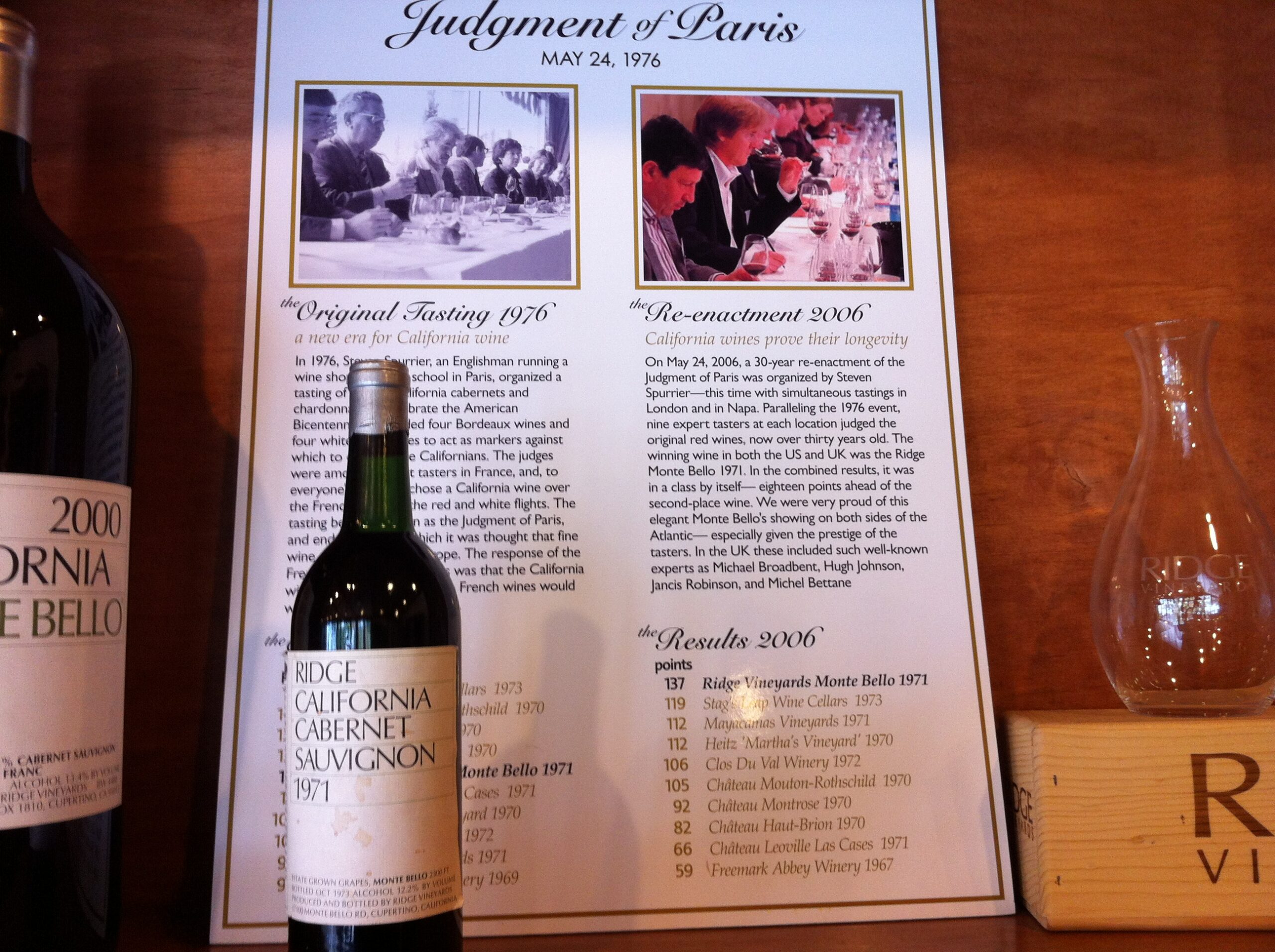
She was also present at the 30th anniversary re-tasting in 2006, serving on the Copia panel in Napa that oversaw the rematch, in which the original California wines, now thirty years old, proved their quality again. Ridge Monte Bello 1971, which had placed fifth in 1976, won the rematch outright. California’s structure, it turned out, had been built to last.
The 50th Anniversary: A Reckoning
This year (the 50th anniversary of May 24, 1976), there have been signs that the reckoning is arriving, even if slowly.
The Smithsonian’s National Museum of American History, which holds the original bottles and tasting glasses from 1976, hosted a commemorative dinner in April 2026 titled “The Judgment of Paris: There’s More to the Story…” a title that seems, if not explicitly, to acknowledge a recovery of overlooked history.
Gallagher herself appeared in the 2022 documentary film Judgement of Paris, finally telling the story in her own voice on screen. And at the Judgment of Napa 50th anniversary event this spring, she was among a small group of original 1976 figures reunited on American soil for the first time, described in the event’s press materials as “Spurrier’s American business partner who conceived the original tasting to showcase emerging quality in California wines.”
Conceived, not assisted, conceived.
The language, in 2026, is finally catching up to the truth.
Why This Story Matters
Patricia Gallagher was not a footnote. She was the origin. She was the one who tasted the wines, saw their potential before the world did, and said: These deserve to be known. She then did the work, organizational, educational, logistical, and intellectual, to make that happen.
She sat at the table. She held her scorecard. And for too long, the story was told as if she had never been in the room.
This anniversary season, as the wine world raises a glass to what happened in Paris fifty years ago, it’s worth making sure we raise one to the right people. Pour a California Chardonnay. Or a Napa Cabernet. Think of the warm September sun over the valley, and an American woman walking the rows, already knowing what the world was about to find out.
Her name was Patricia Gastaud-Gallagher. And it was her idea.
Want to learn more about this wine industry giant?
Sources & Further Reading:
- Steven Spurrier, Académie du Vin Library (2020): firsthand account of the origins of the tasting
- Compiled by Susan Keevil, a compilation of firsthand accounts of The Judgement of Paris, available through Académie du Vin Library (May 2026), The Judgement of Paris: The 1976 Event that Shook the Wine World
- George M. Taber, Judgment of Paris: California vs. France (2005)
- Esther Mobley, San Francisco Chronicle: “The Hidden Figures Behind the Judgment of Paris” (2018)
- Napa Valley Patch 50th Anniversary coverage (2026)
- Grokipedia / Wein.plus: Patricia Gastaud-Gallagher biographical record
- NorthBay Biz: “A Moment in History” (2020)
- NPR, The Salt: “The Judgment of Paris: The Blind Taste Test That Decanted the Wine World” (2016)