
In a world full of NFTs, cryptocurrency, and private real estate, fine wine has proven as an alternative investment class that can weather economic fluctuation. But how do you optimize the potential future value of your liquid investment? What are investors looking for? The key is in your wine’s provenance.
What is a Wine’s Provenance?
Provenance
/prov–uh-nuhns/
A place or source of origin, especially that of a work of art or archaeological specimen.
Wine provenance has to do with the proven, traceable lifecycle of your wine from the moment it leaves its point of origin at the winery. How the wine is handled in shipping and storage is of utmost importance to ensure the wine’s pristine provenance that specialists at the world’s most respected auction houses are looking for.
Provenance is even more important than the region, producer, or vintage. If a bottle of Château Cheval Blanc was mishandled, even though the wine is from a highly-respected producer, improper storage through its lifecycle can render it completely worthless. For very serious wine collectors, provenance is paramount.
Superior Provenance Through Proper Wine Handling & Storage
Once you invest in fine wine, the implicit care you take with it will determine its value. Wine shipping and storage services that cannot be verified as climate-controlled specifically for wine, may tarnish your wine’s provenance and the integrity of your investment.
Experts agree the singular most important factor in protecting the provenance of your fine wine investment lies in its storage. Proper handling of wine during storage protects your investment and helps guarantee a quality product when you take the wine to auction.
“If a wine is destined to be consumed in 20, 30, even 50 years’ time, you need to take good care of it. it’s like a child—you need to nurture it. And wines, like children, don’t deal well with upheaval.” —Simon Tam, Christie’s Head of Wine, Asia
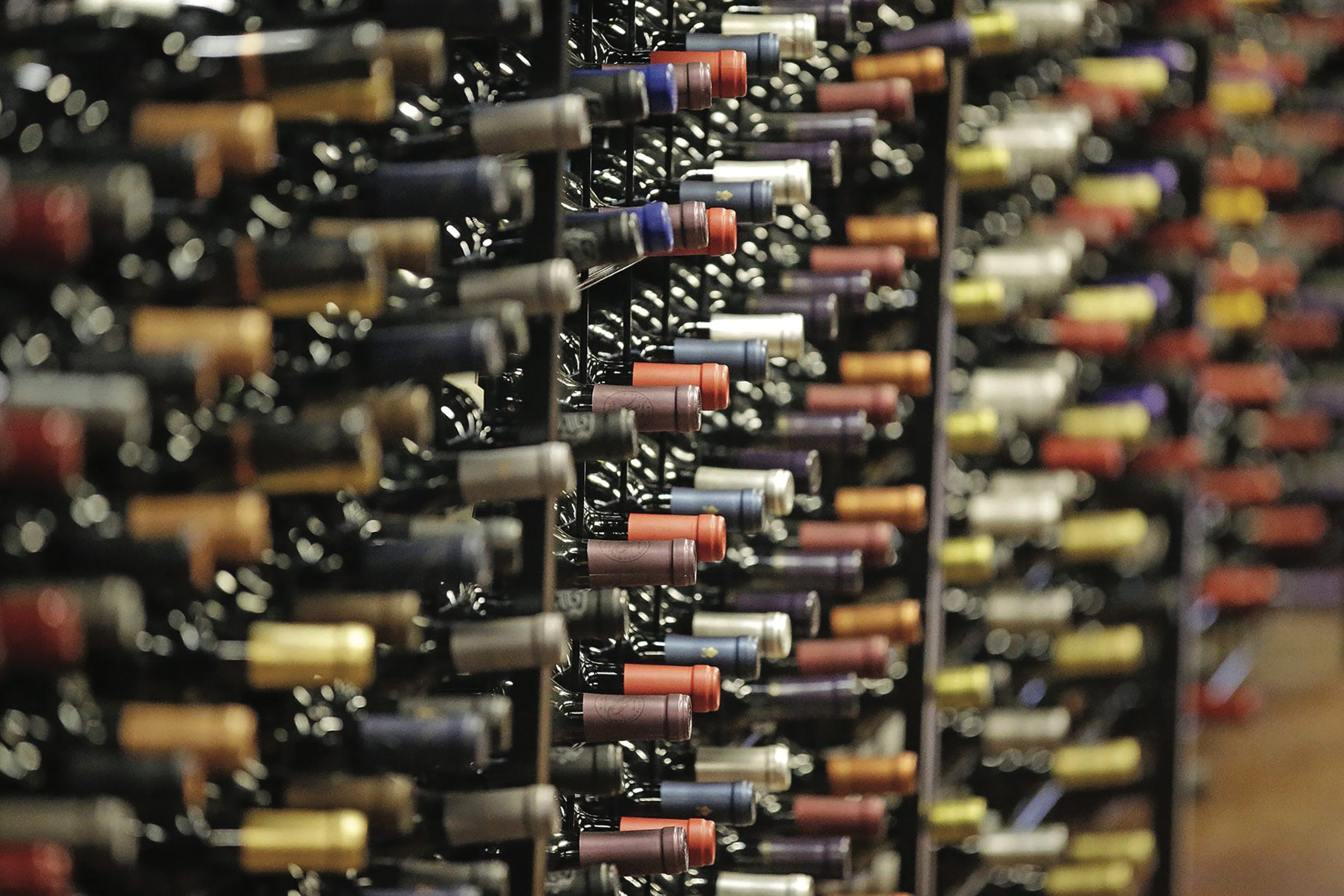 Wine Storage Critical Control Points
Wine is a living thing that is always evolving—proper storage is the key to preserving its value through that evolution. A climate-controlled environment allows for the chemical reactions of aging to occur gradually in a wine, yielding pleasurable tertiary flavors that only come from properly cellaring a fine wine.
Temperature: Wine should be stored in a cool area, 53-57°F (55°F is ideal). Excessively high temperatures will accelerate the chemical reactions in the aging process, and can cause wines to lose their vibrant aroma and flavor characteristics—tasting ‘cooked.’ When the wine’s aroma and flavor compounds are destroyed by heat and the wine tastes like vinegar, your investment is worthless. Sparkling wines can also lose their effervescence.
Humidity: Between 60-70%. Humidity helps to keep corks from cracking. Cracked corks cause excessive oxygen exchange and wine seepage.
Avoid Light: Exposure to artificial and natural light can cause wine to age prematurely, developing off-flavors.
Store Bottles on Their Side: The cork needs to remain in contact with the wine to keep it moist from the inside to avoid cracks that would allow oxygen exchange, causing the wine to deteriorate rapidly, evaporate, and even seep or spill.
Avoid Agitation: Investment wines need to follow Newton’s First Law of Motion and remain at rest as it is evolving. Your wine needs its uninterrupted beauty sleep! As Simon Tam said in the quote above, wine does not deal well with upheaval.
Proper storage conditions are absolutely critical for wine intended for long-term storage as an investment. After a wine has been verified as an authentic product from its producer, specialists then look for signs of poor storage that would affect its quality.
Signs of Poor Storage
Fill level (Ullage): Too much headspace above the fill level of the bottle means evaporation and/or seepage has occurred, and the wine has likely already been damaged due to oxidation, with a greater ratio of the wine now exposed to oxygen due to the increased headspace. All likely due to improper storage.
Some evaporation is expected depending on the age of the wine, but if the fill level is near or at the shoulder of the bottle, it’s a red flag. This level of oxidation could make a Bordeaux taste like an Oloroso Sherry.
Cracked or Shrunken Cork: A cracked or shrunken cork indicates the wine has been stored in an area with low humidity and exposed to vast temperature changes.
Pushed Corks/Wine Seepage: When wine has been stored at high temperatures for an extended period of time, the pressure inside the bottle builds up as the liquid expands and the cork may begin to push out of the bottle and cause seepage.
Poor or off-color: Red wines lose the intensity of their pigment over time, and white wines become more golden with age. However, improper storage with temperature fluctuations can cause red wines to lose pigment very rapidly, and develop a brown hue.
Label Damage: A bit of wear on a label is expected. In fact, if a label is too perfect, an expert would suspect the wine is possibly counterfeit. However, an overly faded label is an indication of overexposure to light.
The main culprit to all these warning signs is exposure to fluctuations in temperature. The only way you can protect the provenance of your wine is with trustworthy shipping and storage of your wine investment.
Provenance:
Verifiable Proof of The Life Cycle of A Bottle of Wine
Keys to maximizing the return on your investment
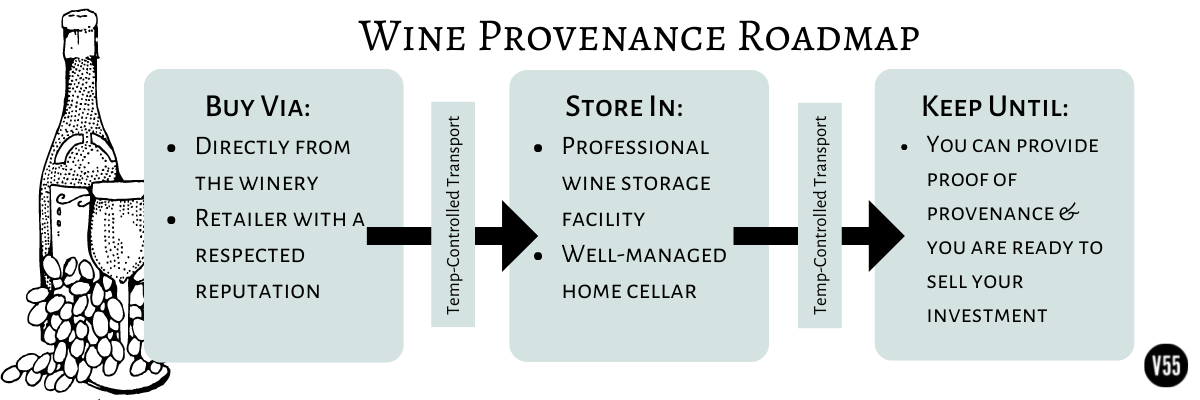
Illustrated in the graphic above are all the points of service for which you need to keep all quotes, receipts, and invoices to protect the provenance of your investment.
- Save your invoices to show proof of purchase directly from a winery or respected retailer.
- Have a record of the transportation service used from the winery or retailer to your home cellar or professional wine storage facility.
- Keep a record of when the wine lands at the storage facility or your home cellar, and what condition the wine arrived in.
- If at any point your move the wine from a professional storage facility to your home cellar, keep track of all quotes, invoices, and receipts for verification of relocation and proper handling.
When you request an appraisal of your wine collection, the auction house’s specialist will ask you for all documentation to verify its provenance. It is also common practice for them to ask for photographs of the storage facility or home cellar where the wine has been stored. Your goal with wine investment is to prove to a future buyer that you purchased the wine in perfect condition and that you’ve maintained that condition through professional storage.
Purchasing wine directly from a winery and storing it professionally until you are ready to sell is always more beneficial than buying wine that has had multiple owners, or has been cellared at home (Any wines purchased from V55 come directly from the winery or importer.) Experts who are evaluating wines to sell at auction always prefer wines that have only one owner because the provenance is cleaner. Not all wines presented at auction have verified provenance, but those that do command higher prices.
 Vinum 55: Wine Storage & Logistics Services to Protect Provenance
At Vinum 55 we are proud to offer delivery acceptance, wine logistics, and wine storage solutions with verifiable documentation to protect the provenance of your collection every step of the way. All of our storage facilities are outfitted with industry-best redundant cooling systems (a system with an uninterruptible power supply for applications where failure is not acceptable), and backup power supplies. Your collection is allowed to get its beauty rest under pristine cellaring conditions.
Once you’ve put the effort into storing your wine collection properly, it’s important to ship it with the same care. Trusting your wine to a transportation service that is not properly trained in wine logistics could permanently damage your investment. If you need to arrange transportation for your collection, our logistics services provide a climate-controlled environment for your wine even in the warmest months to maintain your wine’s pristine provenance.
Your Wine Investment Partner
The most important decision you can make with your wine collection investment once you choose the wines you want to purchase is how you will store them to protect their future value. As a trusted wine concierge service, we are pleased to be your partner in wine from the initial purchase to your collection’s transportation to auction.