
Terms like organic and natural wine can be seen on wine labels in bottle shops everywhere. But what do the terms actually mean? Are they just the new Reserve labeling term of the wine world jumping on the trend with other marketing terms? Yes and no. Let’s break down the terms so the next time you pick up an organic or natural wine you know exactly what’s in the bottle.
Organic Wine
A Certified Labeling Term
The term Organic Wine is a protected term in the United States regulated by the USDA. If a wine is labeled organic, it must be produced with grapes grown in a certified organic vineyard. The process of becoming a certified organic vineyard is lengthy and can be cost-prohibitive for some smaller producers. The additional costs from certification are ultimately passed onto the consumer for the producer to acquire an adequate return on investment.
Furthermore, it can be challenging to use strictly organic practices in areas with very high planting density. If your neighbor uses synthetic sprays, you can’t always control what crosses over into your land.
Practicing Organic
Many winemakers choose to use the term practicing organic to denote they use organic, sustainable agriculture and winemaking practices, but have not received official certification.

In the Vineyard
The goal of moving toward organic practices is to produce the most natural and sustainable expression of both the grape and the terroir. Organic agriculture supports and sustains the health of the soil and its complex ecosystem.
These are just a few organic vineyard practices and their benefits:
- Application of compost that breaks down the soil for slow release of nutrients to the vine.
- Increased organic matter in the soil improves soil health and water-retentive properties, decreasing the need for irrigation, and improving the vine’s drought tolerance.
- Use of cover crops to prevent erosion and contribute to biodiversity.
- Use of natural fertilizers to maintain the natural balance in the vineyard, eliminating synthetic chemicals.
- Reduction of a monoculture of a vineyard that improves the overall health and disease resistance of the vine.
Along with these regulations for producers in the United States, any wines imported into our country must meet our requirements for organic practices if they are going to be labeled as certified organic when sold here.

In the Winery
Not only are there regulations in the vineyard, but if a wine is going to be labeled as Certified Organic, regulations must also be followed in the winery. The first of which is that 100% of the grapes used must be certified organic.
Organic wine regulating bodies have lists of allowable additives and processes, and the regulations vary between countries. Below is a list of a few organic winemaking requirements in the United States:
- All grapes used must be certified organic
- No use of SO2 (some naturally-occurring SO2 is produced as a byproduct of fermentation, but none can be added)
- Yeasts used must be organic.
‘Made With Organic Grapes’
Some wines may be labeled as Made with Organic Grapes, rather than labeled as Certified Organic Wine. These wines are also made with 100% organic grapes, but the same winemaking regulations do not apply. Yeasts may be conventional (but not genetically engineered), and SO2 may be added to wines up to 100 parts per million.
Natural Wine
Not a Regulated Term
Natural Wine is not a term regulated by a certifying organization—this distinction is very important. Any producer can claim that their wine is natural. It is a labeling/marketing term that denotes a wine made in a specific style or category. There is no guarantee of the viticultural or winemaking practices for the bottle’s contents. For example, the grapes may be organically, sustainably, or conventionally grown.
The ethos behind natural winemaking is that of nothing added, nothing removed. It is a low-intervention approach to both grape-growing and winemaking for the purpose of sustainability and maintaining a pure sense of terroir.
These are a few of the criteria with most natural winemaking processes:
- Use of sustainably or organically grown grapes
- Spontaneously occurring fermentation with ambient yeast (with minimal temperature control)
- Low or no SO2 added
- No fining or filtration
- No additives or adjustments (addition of acid, sugars, or tannins for balance)
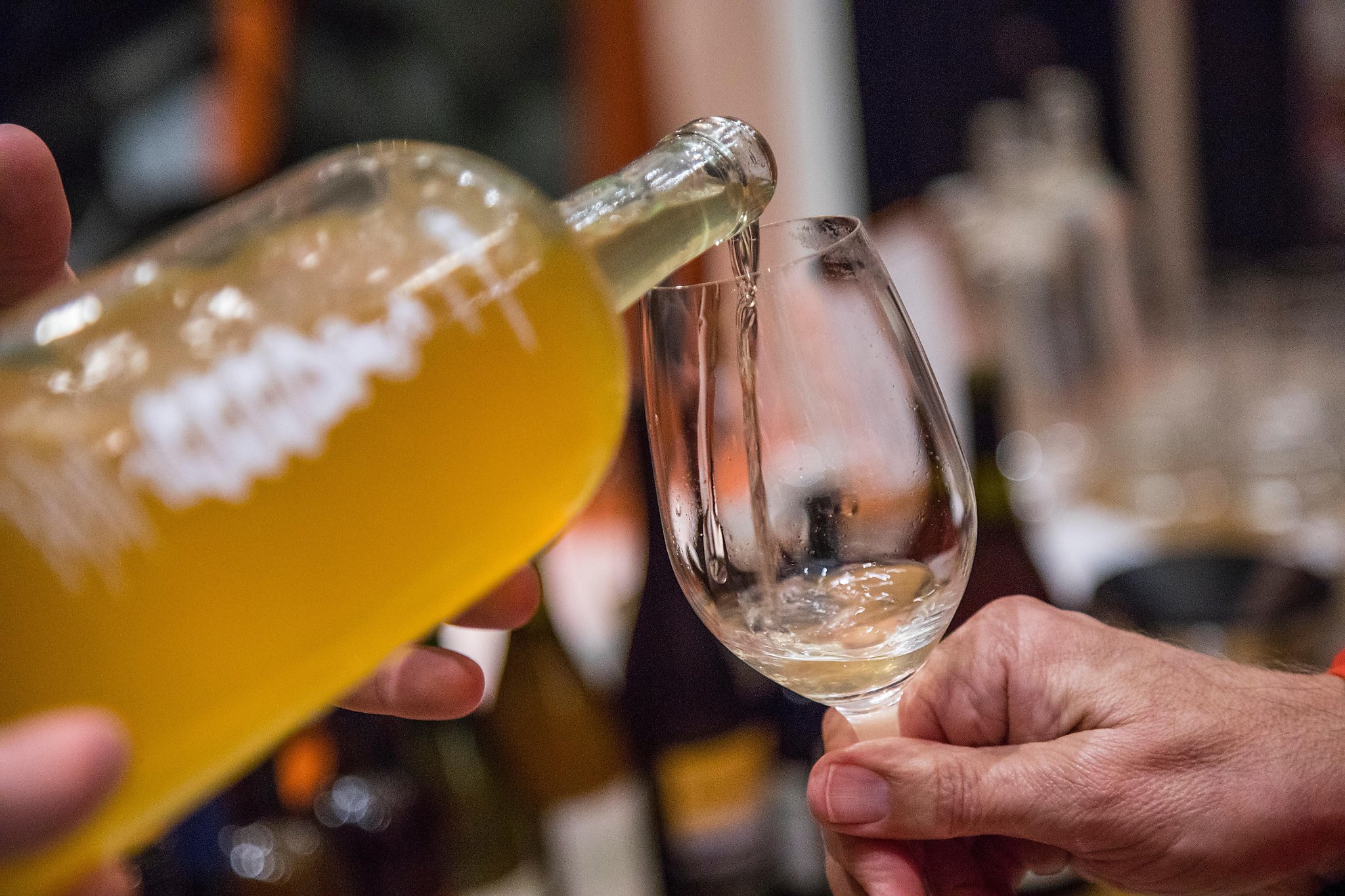
Wines labeled and marketed as Natural Wines are sometimes a bit cloudy or hazy from the lack of fining and filtration or may have off or funky aromas and flavors from the use of natural yeast and spontaneous fermentation. These wines are typically not meant to age for a long time, they are best consumed in their youth.
Many winemakers who produce natural wines believe their methods allow for the purest expression of terroir. However, other winemakers feel that some level of intervention in winemaking is beneficial for the wines to show their best for the end consumer.
Natural Wine: Fad or Here to Stay?
All of this begs the question, is so-called natural winemaking a term that should be protected, or is it a fad? There’s no denying that natural wines have a cult following, but with no regulating body and so many varying styles and methods of producing natural wine, it’s difficult to identify exactly what it should be. Is it a trendy category that will eventually fade in popularity?
Natural Winemaking Isn’t New
The funky characteristics of natural wines that seem to set them apart are seen as overt flaws by other wine lovers. But low intervention doesn’t always equal hazy, funky wine. There are many old-world producers who have been using minimalist winemaking practices for generations to create elegant, refined styles of wine. For example, Jules Chauvet, a Beaujolais negociant, has been called the ‘father’ of natural winemaking for his studies, practices, and publications from the mid to late 1900s. Nearly 125 years ago he advised against the use of synthetic chemicals in the vineyard and cellar, with the concern those interventions would disrupt the balance of terroir.
Wine can still be stable, age-worthy, and clear without high levels of intervention. It’s simply a more time-consuming process.

When It Comes to Wine, Labels Matter
The final style of wine desired and the choices made in arriving at that final destination is ultimately up to the producer. The language included on a label should help the consumer understand what is in the bottle. Information such as the specific wine region, vineyard, producer, grape variety, vintage, and agricultural practices all help you to understand what’s in the bottle. A little bit of knowledge of wine labeling terms helps you to be the savviest wine consumer you can be.